
Grounded in Sustainability: Disruptive Packaging’s Growth in Produce Across North America
By Mark Delafosse, Director Global Solutions Sales

Evolving from Produce Roots to Multi-Sector Growth
When we set up Disruptive Packaging, the business originally focused on produce packaging and, over time, expanded into the seafood and meat/poultry sectors. Currently, produce accounts for just over 60% of total business in North America and is expected to remain the dominant segment in both revenue and packaging volume, though its growth is influenced by weather and other external factors.
In North America, about 60–70% of our produce business is in the United States, 25–30% in Mexico, and 5–10% in Canada. Globally, Australia represents around 15–20% of total volume. Despite its smaller market size, Australia, our initial market, often serves as a valuable testing ground for new products due to its geographic diversity and logistical challenges.
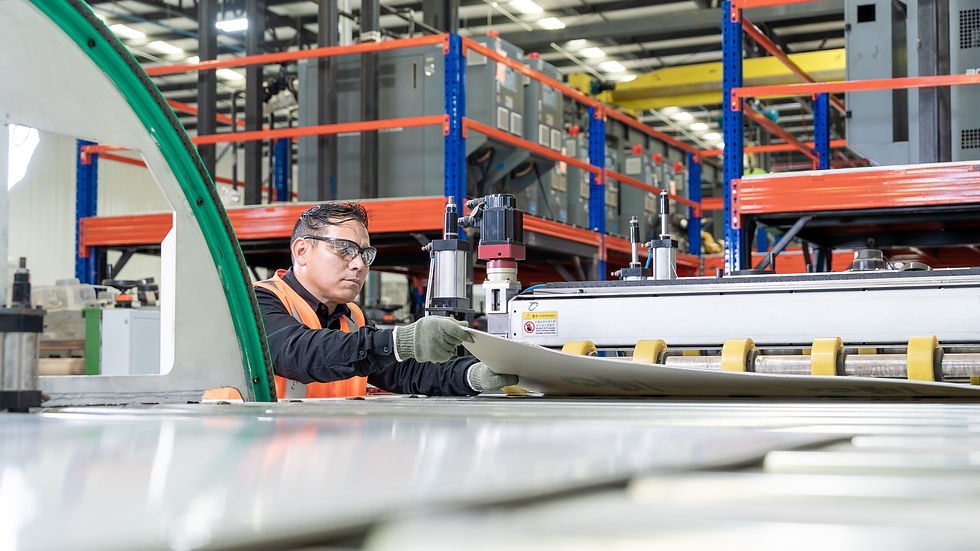
We recently completed setting up our North American manufacturing operations in Mexico, marking the beginning of local production and service capabilities in the region. Although manufacturing in North America is still in its infancy, the core product was developed in 2017–2018 and took about three years to commercialise, launching globally during the COVID-19 period. The product is now fully developed, commercially manufactured, and widely used in the U.S. produce market, particularly on the West Coast and in Florida.
The URTHCOR® Advantage: Sustainable Packaging in Action
Our leading packaging product is URTHCOR®, primarily used in the produce industry as a sustainable alternative to single-use or non-recyclable packaging. Other key products include URTHCOMB®, a honeycomb-structured material suited for various applications, and URTHCOOL®, designed for seafood, meat, and poultry packaging requiring thermal insulation.
These products are classed as ‘outer packaging’, suitable for replacing traditional waxed cardboard, polystyrene, and similar materials used for wet or premium produce requiring moisture resistance. The packaging solutions are used across various formats—from small retail packs (like persimmons or kiwifruit) to larger export trays.
Target markets in the U.S. include key produce-growing regions such as Salinas, Fresno, Bakersfield, Florida, and parts of the Northeast and Midwest (e.g., Michigan), focusing on crops like celery, broccoli, lettuce, cauliflower, radishes, and green onions.

Meeting Market Demands: Balancing Cost and Sustainability
Initially, sustainability was the primary driver for adoption, especially among organic growers. Today, it is considered a standard expectation alongside cost competitiveness. We emphasize that our sustainable packaging is commercially viable, ensuring growers are not disadvantaged by switching from traditional materials.
As North American manufacturing scales up and similar producers enter the market, sustainable packaging is becoming more accessible and price-competitive. However, only a small segment of the market is willing to pay a premium for sustainability. Most consumers and retailers remain price-sensitive, especially given cost-of-living pressures and competition from long-established, low-cost packaging materials that have been in use for decades.
Our focus has therefore been on improving manufacturing efficiency in North America to minimize or eliminate any price premium compared to traditional single-use packaging. Also, the benefit that URTHCOR® comes flat-packed, allows our customers to save on warehouse costs and improving both inbound and outbound freight efficiency, with savings of between 25–40% on freight costs.
From organic growers to mainstream markets
Early adopters were primarily organic and premium produce growers, whose demand for sustainable solutions helped drive innovation and cost reductions. As production efficiency improved, adoption expanded to more mainstream produce categories such as broccoli, green onions, asparagus, and grapes, with new trials underway in strawberries.
Innovating for Tomorrow: Ongoing Product Development
Product development remains ongoing—currently only 30–40% complete. We are investing in new materials, including compostable options, and continuously refining design and engineering to reduce material use while maintaining strength.
Compostable packaging is seen as a major future opportunity, though it remains costly and requires lengthy certification processes. We expect to bring a viable compostable master carton to market within about three years, depending on regulatory developments.
Collaboration and Regulation: Driving Industry Change
Other key drivers of sustainable packaging adoption include increasing government regulation. At Disruptive Packaging, we believe collaboration among producers, retailers, and policymakers is essential to accelerate change. Clear standards and accountability for recyclability and end-of-life packaging waste management are needed to create a level playing field and reduce greenwashing. Governments can further support progress through incentives and infrastructure investment.
Recycling and Circular Systems
Recycling remains a global challenge due to economics, limited infrastructure, and sorting complexity. To address this, we operate a recycling line at our Mexico facility—expanding the recovery of our materials and end-of-life packaging—and advocate for greater investment and education to improve recycling rates.
We strongly believe in a closed-loop system where recycled materials become cost-competitive with virgin materials. We also support states implementing Extended Producer Responsibility (EPR) programs, which aim to increase recycling rates and incentivise sustainable packaging design and materials.
Looking Ahead
Over the next five years, our goal is to expand to six to ten manufacturing sites across North America, establish large-scale recycling and feedstock systems, and lower costs through circular production. We expect collaboration among manufacturers to become increasingly important as the sustainable packaging industry continues to mature.
